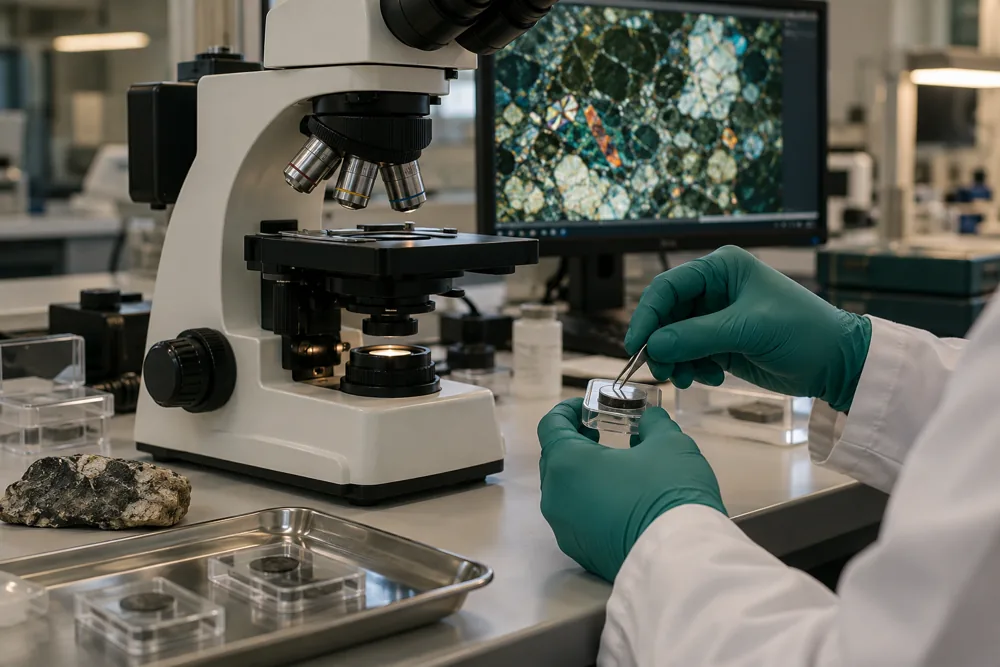
Identify Materials Before Disturbance
Asbestos testing helps answer whether a specific building material contains asbestos. Colour, texture and photographs cannot confirm the answer. Testing is useful when a contractor encounters an uncertain product, a facilities team needs to clarify a register entry, or a project scope depends on a particular suspect material.
The result applies to the sample examined. It does not automatically describe another room, another layer or a visually similar product elsewhere. Good sample records are important because a result without a precise location can be difficult to use safely on site.
Controlled Sampling For Commercial Sites
Sampling should be carried out by a suitably trained person using controls appropriate to the material and surroundings. Tell us whether the area is occupied, whether the material is damaged and whether services or access equipment are involved. Do not cut, drill or scrape a suspect material to create a sample yourself.
Before attendance, share plans, previous survey references and photographs taken without disturbance. A sampling brief should explain what question needs answering. That may be the identity of a floor finish, a ceiling product or a specific board affected by a proposed alteration.
Laboratory Analysis And Traceability
Asbestos bulk analysis should be undertaken by a competent accredited laboratory. HSE’s HSG248, Asbestos: The Analysts’ Guide, describes relevant analytical practice. Ask for the laboratory’s accreditation scope and a report that connects the result to a unique sample reference.
The chain of information should run from the material’s location to the sampling record and the final certificate. An ambiguous description such as a general room name may be inadequate if several layers or products were sampled. Clarify this before using the result to authorise work.
The Testing Process
Start by describing the material and why it needs to be tested. The next step is to agree the sampling locations and access controls. Following controlled collection, the sample is submitted for laboratory analysis and the result is returned with identifying information.
Review the findings against the intended work rather than reading the result in isolation. A positive identification can lead to a management decision or a removal scope. A result that does not identify asbestos in one sample does not release untested building fabric for unrestricted disturbance.
What Changes The Quotation
The number and type of materials influence sampling and analysis costs. Access arrangements, controlled access to occupied rooms, travel between separate buildings and the reporting needed for your contractor can also affect the fee. A difficult-to-reach product may require more planning than several accessible finishes.
Ask what the quotation covers, including the visit, individual analyses and the report. Explain any construction deadline before appointment so the laboratory arrangements can be discussed. No turnaround is promised until the scope and available analytical capacity have been confirmed.
Testing Is Different From A Survey
Targeted material testing is not a substitute for a survey covering a planned refurbishment. If workers will open several parts of the building, isolated samples can leave hidden products unexamined. Use the construction scope to decide whether a wider investigation is required.
The Control of Asbestos Regulations 2012 require asbestos risks to be addressed before relevant work proceeds. Keep sample certificates with the register or project report and share them with the people making site decisions. If the finding does not answer the original question, seek clarification before work resumes.