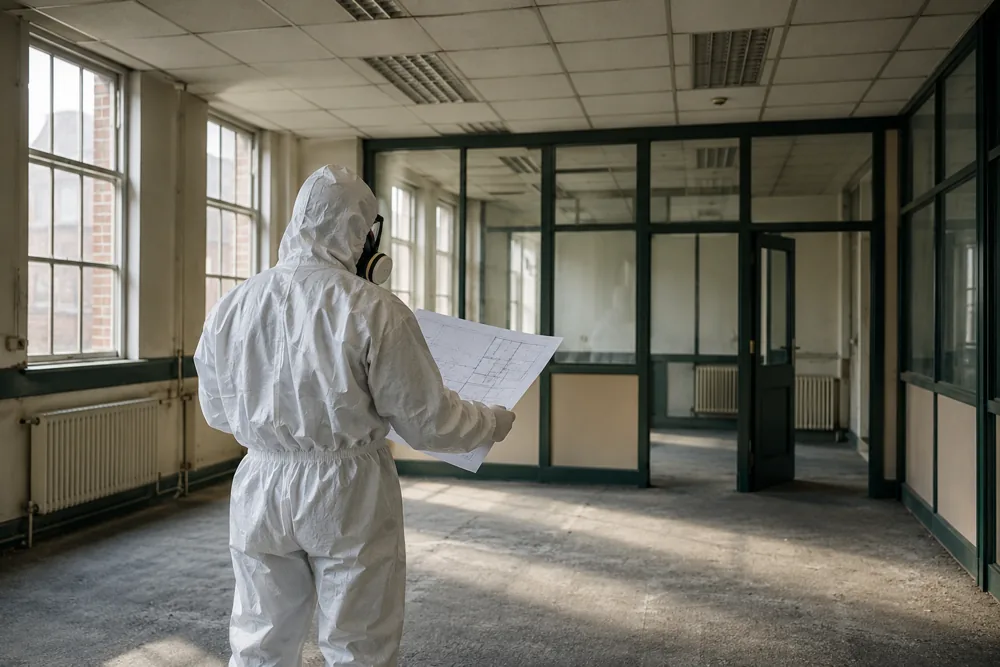
Investigate The Actual Work Area
A refurbishment or demolition asbestos survey is designed around the work you intend to undertake. It needs to locate materials that could be hidden behind finishes, inside partitions or within services affected by the project. A general visual inspection cannot answer all of those questions.
Provide drawings and a clear description of the proposed alterations. Include penetrations, service routes, ceiling removal, floor build-ups and any structural changes. If the design changes later, the survey scope may need review before contractors move into the newly affected areas.
Why A Management Survey Is Different
A management survey supports occupation and routine maintenance within its stated scope. It is not a substitute for investigating building fabric that will be opened during refurbishment. Concealed materials can remain outside what was accessible or appropriate to inspect during a normal management visit.
An older report may still be useful background information. Its findings and limitations should be reviewed against the current project rather than discarded or relied on automatically. The question is whether every part of the proposed disturbance has suitable asbestos information.
Intrusive Access Needs Planning
Refurbishment and demolition surveys can involve destructive inspection. The affected area must be vacated and access controlled while the investigation takes place. Agree isolation, safe access, building security and the extent of making good before appointment.
Occupied adjoining areas and shared services may limit when the work can happen. A phased investigation may be possible if the project boundaries are clear. Any location that cannot be accessed needs a recorded limitation and an agreed next action before construction reaches it.
A Step-By-Step Project Brief
Begin with the building plans, existing asbestos records and the construction scope. The surveyor then identifies the investigation boundaries and required access. The inspection and sampling follow, with findings tied to material locations and the parts of the building affected by the planned work.
Review the report before finalising the removal or strip-out programme. Resolve any significant restrictions and confirm that the survey matches the latest design. The next contractor should receive the relevant report and plans, rather than only a summary email saying the building has been surveyed.
Legal Framework And Deliverables
The Control of Asbestos Regulations 2012 require asbestos to be identified before relevant work begins. HSE guidance in HSG264 explains the distinct purposes of management and refurbishment or demolition surveys. Competence, access and an accurate construction brief are central to a useful instruction.
The report should describe the inspected areas, identified materials, sampling information and limitations. Agree how findings will be presented so the project team can use them to prepare removal scopes. A survey report is not a removal certificate and does not authorise uncontrolled disturbance of identified materials.
What Affects The Survey Fee
The extent of intrusion, complexity of the building and access to concealed spaces influence cost. Multiple construction phases, service isolations and specialist access equipment can add to the instruction. The number of samples and the format of the final drawings also matter.
Clarify whether the quotation includes opening up, making good, laboratory analysis and any return inspection of inaccessible locations. Give the survey team the intended programme early. A cheaper instruction with major restrictions may leave unresolved questions that delay the main contractor when work starts.